
Code Discovery Points to New VR Hardware Branch
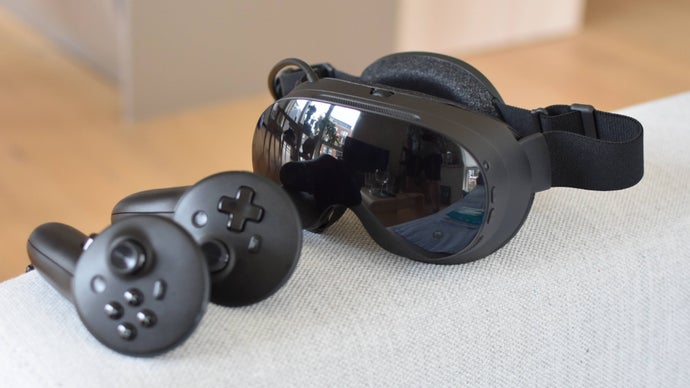
A recent dive into the underlying software for Valve's virtual reality hardware has revealed evidence of a potential high-spec variant of the Steam Frame. As initially spotted by SteamFrameHub, snippets buried within the newly released Steam Frame kernel source code contain direct references to an unannounced version of the headset featuring upgraded OLED displays.
Hardware prototypes frequently leave traces in public code repositories, often representing abandoned iterations scrapped early in development. However, timing details surrounding this discovery suggest the project might be more than a discarded early attempt. A dedicated code branch associated with the device—referred to internally by the codename "Planar"—received an update on October 2nd. Crucially, this code modification occurred weeks after Valve had already opened reservations for the standard LCD-equipped Steam Frame.
Upgraded Display Specs and Samsung Comparisons
The kernel references provide specific technical metrics regarding the displays tied to the "Planar" codename. According to the source snippets, the rumoured OLED lenses feature a native resolution of 3,552x3,840 per eye, alongside a maximum refresh rate of 90Hz.
These specifications are suspiciously identical to the MicroOLED lenses utilized by Samsung's Galaxy VR headset. Should Valve ever bring a device with these specifications to market, it would mark a massive step up in pixel density compared to the currently known Steam Frame model, which utilizes LCD displays with a resolution of 2,160x2,160 per eye.
Managing Performance Demands with Foveated Scaling
Driving displays at a resolution of 3,552x3,840 per eye in standalone VR mode introduces significant computational challenges. Pushing that many pixels directly on the headset creates a much harsher workload for internal hardware compared to rendering for 2,160x2,160 panels. Furthermore, the kernel references suggest that the underlying Snapdragon System on Chip (SoC) powering the device remains unchanged from the standard model, meaning raw processing power would not be increased to match the higher display resolution.
To overcome this performance bottleneck, the source code indicates that Valve may be relying on specialized optimization tech. The kernel hints at the inclusion of a feature called "foveated scaling," which works as a companion to the platform's foveated rendering and foveated streaming technologies.
Foveated scaling works by dynamically adjusting pixel distribution based on where the user is looking. The system applies a higher pixel density directly to the focal area targeted by the user's eyes, while applying a lower, far less demanding pixel density to peripheral areas. By focusing the highest visual clarity strictly where it is needed, the system can drive high-resolution OLED lenses without overloading the mobile processor during standalone play.
An Uncertain Future for the "Planar" Model
While the kernel update from October 2nd proves that Valve was actively tinkering with the "Planar" branch well past the opening of Steam Frame reservations, the overall purpose of a Steam Frame OLED remains somewhat ambiguous. Upgrading to high-end OLED panels would address display quality and black levels, which are noted drawbacks of conventional LCD screens. However, doing so with an unchanged Snapdragon SoC requires heavy reliance on software solutions like foveated scaling to keep standalone experiences smooth. Whether Valve intends to eventually launch the OLED variant as a higher-tier product or keep it strictly as an internal testing platform remains to be seen.

No comments:
Post a Comment