
Relic Shifts Focus Back to Single-Player Content
For players dedicated to single-player real-time strategy, the post-launch trajectory of Company of Heroes 3 has required a significant amount of patience. Over a period of three years, developer Relic concentrated its downloadable content strategy predominantly around multiplayer updates. DLC after DLC was released with a focus on expanding the roster of units available for competitive online matches, leaving solo players waiting for a meaningful expansion to the game's single-player offerings.
That long-standing pattern finally changes with the release of Operation Torch. Positioned as a major addition to the title, this expansion redirects the game's focus back toward a dedicated solo campaign. For strategy fans who spent years hoping for new story-driven missions rather than purely competitive unit roster additions, the arrival of Operation Torch initially appears to be a very welcome addition.
The North African Campaign Scope and Narrative
In terms of scale and setup, Operation Torch offers a substantial single-player package centered around a 15-mission campaign set in the North African theater. The narrative framework follows two US officers as they attempt to break the German Afrika Korps' hold on the region. Through this setup, players are tasked with guiding American military forces through a series of key combat scenarios aimed at loosening enemy control.
Spanning 15 distinct missions, the campaign provides a sizeable commitment for strategy enthusiasts. Given that fans waited three years for Relic to expand the single-player side of Company of Heroes 3, the expectation was that this return to campaign design would offer a deeply rewarding tactical experience.
Battlefield Chaos Meets Rigid Scripting
Despite the high anticipation surrounding the expansion, the final result is far from simple. In a review published by Rock Paper Shotgun, the reviewer notes that after playing through the entirety of the 15-mission campaign, saying the expansion was fully worth the wait is not so straightforward.
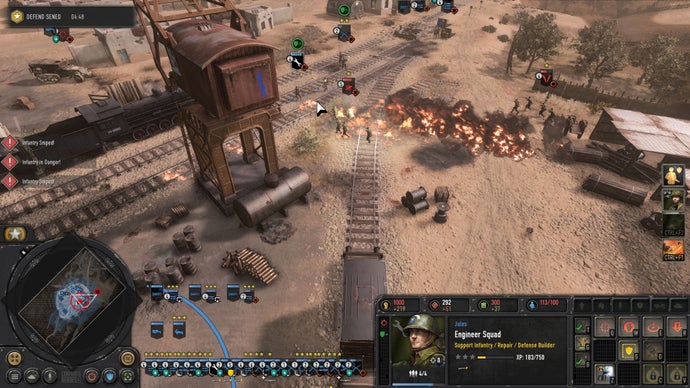
The central critique of Operation Torch lies in the tension between its gameplay design and mission execution. The campaign certainly features impressive moments, bringing forward the kind of barely held-together chaos that makes tactical battles engaging. However, the review highlights that these thrilling instances are ultimately squandered by heavy mechanical scripting. Instead of giving players room to maneuver through dynamic battlefield situations, the rigid scripting limits the experience, undermining the chaotic tactical moments that show the campaign at its

No comments:
Post a Comment