
Why One City Is No Longer Enough
In a genre that has long celebrated the solitary act of building a single, thriving metropolis, County of Fortune flips the script. The early‑access title invites players to construct multiple medieval towns across a single, expansive county map, rather than starting from scratch on a fresh save file each time. This approach taps into a common frustration among city‑builder enthusiasts: the desire to experiment with different layouts, economies, and civic policies without the overhead of managing separate game worlds.
Building a County, Not Just a Town
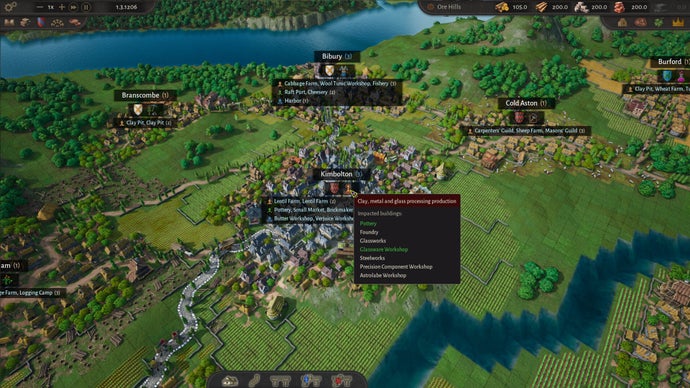
Unlike traditional city‑builder staples that focus on a single settlement, County of Fortune expands the canvas to a broader region. Players can create several towns, each with its own character and developmental trajectory, all situated within the same map. The towns are positioned close enough to interact—within a motorway’s worth of driving distance—allowing for trade, shared resources, and regional planning that would be impossible if each city lived in isolation.
Medieval Focus, Modern Tools
Set in a medieval context, the game retains the era’s aesthetic and logistical constraints, such as stone roads and timber houses, while offering modern city‑building mechanics. Players can design infrastructure, manage populations, and oversee economic growth, but they also have to account for the logistical realities of the time, like limited transport options and the need to cultivate land for sustenance. This blend of period authenticity and contemporary gameplay keeps the experience fresh for veterans of the genre.
Early Access: A Work in Progress
Released in early access, County of Fortune is still evolving. Developers are actively gathering community feedback to refine city‑building systems, balance economic mechanics, and expand the county’s geography. While the core gameplay loop is already solid, players should expect ongoing updates that will introduce new buildings, policies, and potentially even more expansive regional features.
Why County of Fortune Stands Out
There are a few key differentiators that set this title apart. First, the multi‑city framework encourages experimentation: players can test different zoning strategies or economic models in one town and then see how those choices ripple across neighboring settlements. Second, the shared map encourages a sense of regional cohesion; towns can collaborate or compete for resources, adding a layer of strategic depth. Finally, the medieval setting offers a nostalgic backdrop that appeals to fans of historical simulations, while the game’s design ensures that the learning curve remains approachable.
Getting Started: Tips for New Players
For those new to the title, a few practical suggestions can help ease the learning curve:
- Start Small. Begin with one town and master its fundamentals before expanding to additional settlements.
- Plan Infrastructure Early. Roads and trade routes that connect multiple towns will pay dividends as the county grows.
- Leverage Shared Resources. Use one town’s surplus of timber or stone to support the development of a neighboring village.
- Watch the Economy. Medieval economies can be fragile; keep a close eye on food production and market demands.
Looking Ahead
As County of Fortune continues to grow in early access, players can anticipate a richer set of features that will deepen the multi‑city experience. Whether it’s new building types, more complex economic interactions, or expanded regional maps, the developers appear committed to refining the vision of a county where dozens of towns can coexist and thrive together.
Conclusion
For city‑builder fans craving more than a single settlement, County of Fortune offers a compelling alternative. By allowing players to develop an entire medieval county—complete with interconnected towns on a shared map—the game challenges the conventional single‑city paradigm. While still in early access, its unique approach and solid foundation make it a title worth watching as it evolves.

No comments:
Post a Comment