
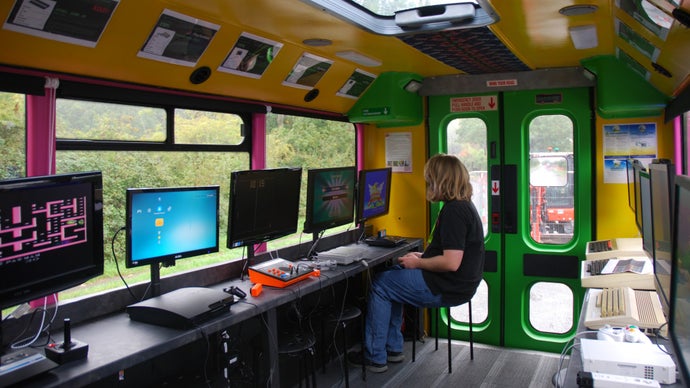
A Mobile Classroom for Classic Hardware
For many young gamers today, video game history exists primarily as digital re-releases or online videos. However, a father-and-son duo is changing how kids interact with vintage technology by bringing physical retro hardware directly to them. Known as Retro Reset, the inspirational project operates out of a converted bus outfitted with classic consoles and early computing setups. Run by Luke Stoner alongside his father, Jason, the Retro Reset bus offers students a unique, hands-on educational experience focused on historic gaming tech and programming.
When students first step aboard the Retro Reset bus, the initial reaction is an excited push toward the familiar sights and sounds of classic hardware. The mobile environment creates an energetic atmosphere as kids scramble for a spot in front of the screens that catch their eye. Right near the entrance, a Sega Mega Drive running the original Sonic the Hedgehog quickly sparks a friendly rush, with the fastest student triumphantly claiming the stool placed in front of the console.
Connecting Modern Players with Pixelated Roots
One of the intriguing aspects of Retro Reset is observing how modern children react to display tech from previous decades. During these sessions, Jason engages with the young players to ask what they think about the visuals of earlier console eras. When asking one student about the slightly grainy and pixelated graphics of the Mega Drive display, the response comes through action rather than complaints: the visual limitations do not bother the player at all, who becomes completely engrossed in the game within moments.
This smooth shift from initial curiosity to deep immersion highlights the enduring appeal of classic game design. Even when playing on monitors that look fundamentally different from today's high-definition screens, students adapt immediately and focus entirely on the core gameplay experience.
Hands-on Coding on Vintage Systems
While classic gaming consoles serve as an easy draw, Retro Reset also introduces visitors to foundational personal computing. Located toward the back of the bus sits an authentic 1981 BBC Micro Model B. As Jason explains to the students, this iconic machine holds a notable spot in history, having helped turn a national broadcaster into a computer retailer with assistance from Acorn.
The BBC Micro Model B gives kids a rare chance to experiment with early hardware, and the interactive nature of the setup often steals the spotlight from traditional games. In one session, a student named Jackson spent time working with the machine, restarting it a couple of times to get his code working properly. When his efforts paid off, a flickering screen displayed the phrase "Jackson is a wally" emblazoned across the monitor in seven distinct colors.
Jackson's chuffed yell of victory drew the attention of surrounding classmates, who craned their necks to check out the coded message. Seeing an original script run successfully on a device over four decades old demonstrates the ongoing educational value of physical computing history.
Inspiring New Generations of Gamers
Projects like Retro Reset highlight the power of interactive learning when exploring tech heritage. By bringing together legendary consoles like the Sega Mega Drive alongside historical computing workhorses like the BBC Micro Model B, Luke and Jason Stoner have created an environment where gaming history is actively explored and tested.
Whether students are steering Sonic across a retro display or inputting their very first lines of code on vintage hardware, the Retro Reset bus continues to engage young minds. By preserving classic hardware in a mobile setting, the project ensures that the foundational era of interactive entertainment remains fun and accessible to a brand-new generation.

No comments:
Post a Comment